









A Beginner's Guide to Racing Chronographs and Their Features
What Exactly Is a Racing Chronograph?
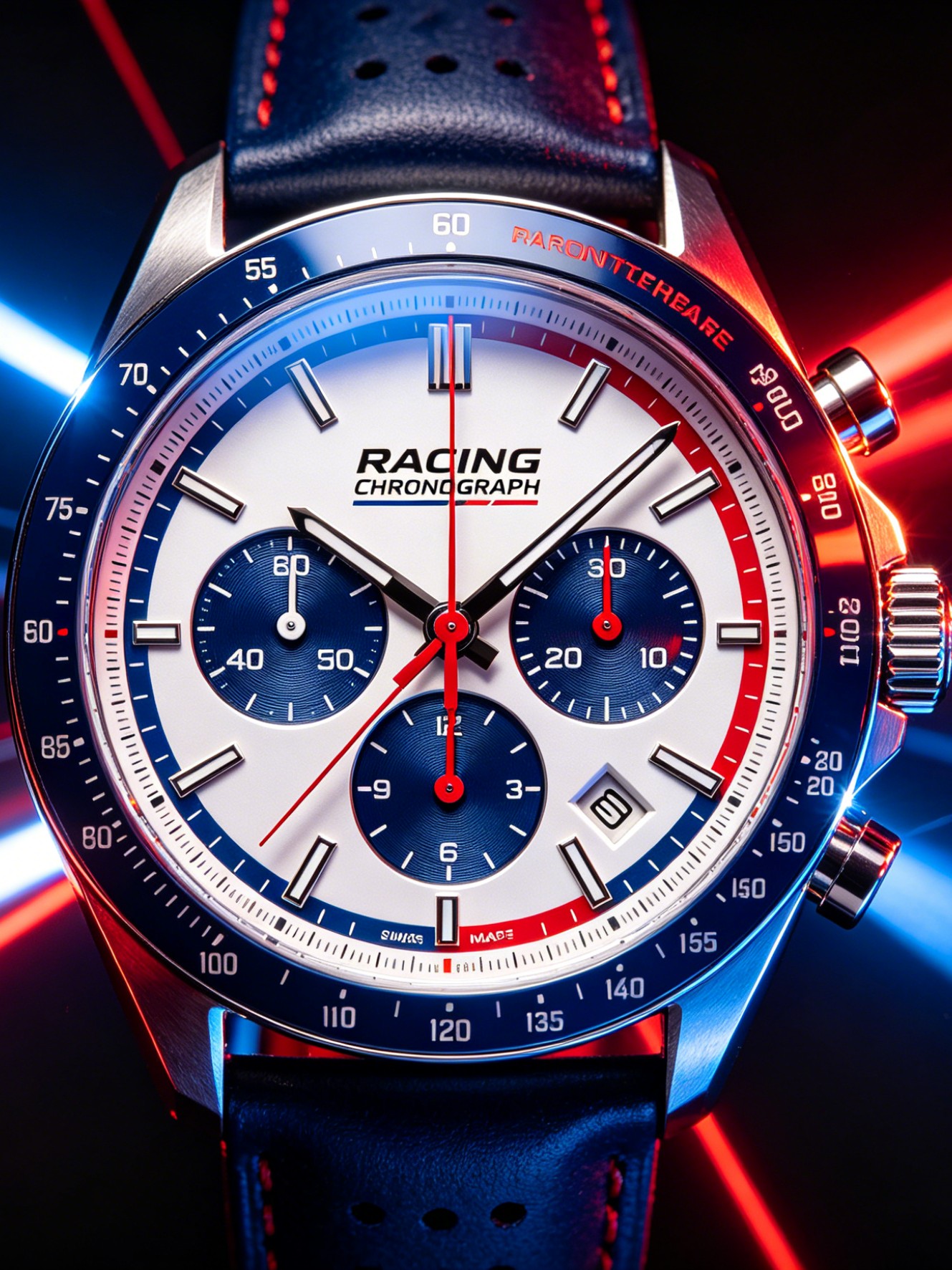
A precision wrist timepiece built for competitive speed sports, a Racing Chronograph integrates independent stopwatch mechanics alongside standard daily timekeeping. Unlike generic dress chronographs designed purely for aesthetics, this category of watch is engineered around the real timing demands of track laps, rally segments and motorsport competitions.
Three defining traits separate functional motorsport timing watches from ordinary chronograph models:
- Independent ergonomic pushers dedicated to start, stop and zero-reset timing operations, separated from the main winding crown
- Calibrated tachymeter markings printed on the dial or outer watch bezel to calculate average speed over fixed measured distances
- High-contrast, bold dial markers that deliver instant readable time data even during fast-paced movement or while wearing driving gloves
These specialized timing instruments serve hobbyist track enthusiasts, professional pit crews and event judges who rely on split-second accuracy to measure athletic and automotive performance.
The Internal Mechanics Behind Chronograph Timing Functions
Every chronograph adds supplementary mechanical hardware to a standard wristwatch movement, creating a dual-purpose device for regular time and interval tracking.
- Stopwatch pusher operation: Two control buttons sit above and below the crown. The upper actuator starts and pauses the chronograph central second hand, while the lower button fully resets all timing counters back to zero.
- Tactile button engineering: Pushers are built to withstand thousands of repeated presses with distinct firm feedback, eliminating accidental misfires mid-lap timing sessions.
- Multi-counter subdial layout: Most track-ready timepieces feature two or three smaller subdials to log elapsed seconds, minutes and extended hour intervals. Standard daily hour/minute hands remain visually separate to avoid confusion between wall-clock time and race lap measurements.
Thanks to this dual integrated system, owners rely on a single watch for casual everyday wear and high-stakes competitive timing without switching accessories.
The Core Purpose of Motorsport Timing Watches
The invention of the Racing Chronograph traces directly back to motorsport’s critical demand for consistent, precise elapsed-time recording. Racing victories and performance evaluations often hinge on tiny fractional time gaps, making purpose-built timing watches an essential piece of track gear.
- Repeatable lap and split timing: Responsive pushers and stable internal movements allow crews to log sequential lap times reliably, comparing driver or vehicle performance across multiple circuit runs.
- Practical tachymeter functionality: Outer scale markings solve a core track problem: calculating average speed once the time to complete a set-length lap is recorded. This speed-measuring feature is the primary marker separating racing-focused chronographs from general-use alternatives.
- Practical-first design priority: Fashion chronographs often prioritize polished finishes and slim profiles; racing variants prioritize legibility, durable construction and usable timing complications above decorative details.
Must-Know Core Functional Features of Quality Racing Chronographs
When shopping for a functional motorsport watch, eight core features directly impact timing reliability and usability on circuit tracks. Below breaks down each component’s real-world value for new collectors:
Tachymeter Bezel & Calibrated Speed Scale
- Translates elapsed lap time over a standardized fixed distance into clear average speed readings for quick on-track performance checks
- Only delivers accurate speed calculations when timing a consistent pre-defined lap length; decorative printed tachymeter markings found on fashion watches will not operate as functional measuring tools
Timing Control Pushers
- Dual side-mounted buttons handle all stopwatch operations without disrupting standard time display
- Textured, raised construction ensures easy manipulation with thick driving gloves or during bumpy rally stages
Multi-Function Subdials
- Separate small dials independently track accumulated seconds, minutes and multi-hour race sessions
- Eliminate visual clutter by separating cumulative lap data from real-time daily clock readings
High-Contrast Dial Layout & Instant Legibility
- Oversized bold numerals, uniquely shaped timing hands and contrasting color layers make readings visible at a single glance
- Clear visual separation between base time displays and chronograph counters removes misread risks during fast track activity
Water Resistance Ratings & Protective Case Hardware
- Common water protection grades range from 50m to 200m depth resistance, shielding internal mechanics from rain, track sweat and minor splashes
- Important caveat: Most timepieces lose water tightness when pushers are activated while fully submerged underwater
Watch Case Build Materials
- Stainless steel frames deliver heavy-duty scratch resistance for regular track use
- Titanium and carbon composite frames cut down wrist weight for all-day comfort without sacrificing structural toughness
- Sapphire crystal face covering prevents surface scratches that obscure dial markings over time
| Watch Feature | Primary Practical Function | Track Timing Importance | Beginner Buyer Priority Level |
|---|---|---|---|
| Functional Tachymeter Scale | Calculate average lap speed over fixed distance | Critical for motorsport performance tracking | High |
| Ergonomic Timing Pushers | Start, pause and reset stopwatch functions | Foundational to all lap timing tasks | High |
| Multi-Counter Subdials | Log cumulative seconds, minutes and hours | Supports multi-lap split time comparisons | High |
| High-Clarity Contrast Dial | Fast, error-free time reading in motion | Prevent costly misread lap data | High |
| Water Resistance Seals | Protect internal mechanics from moisture exposure | Defend against sweat, rain and track splashes | Medium |
| Lightweight Watch Case Material | Balance wrist comfort and long-term durability | Affects all-day wear comfort on and off track | Medium |
Main Movement Variants Available for Motorsport Timing Watches
Different internal movement architectures suit distinct user budgets, maintenance tolerance and timing frequency needs. Every variant delivers core chronograph functionality with unique tradeoffs for new buyers:
Hand-Wound Mechanical Chronographs
These timepieces rely on manual daily winding to power internal timing hardware. Collectors favor them for refined craftsmanship heritage, though they require consistent routine care to maintain accurate timekeeping.
Self-Winding Automatic Chronographs
Built with identical mechanical timing systems as hand-wound models, self-winding variants add a rotating weight rotor that harvests natural wrist movement to store power, removing the need for daily manual winding and disposable batteries.
Flyback Chronograph Movements
Optimized for continuous sequential lap recording, flyback hardware combines the reset and restart stopwatch actions into one single button press. This cuts out the two-step operation required by standard chronograph models, ideal for drivers logging back-to-back circuit laps.
Split-Second (Rattrapante) Chronographs
Equipped with two independent overlapping timing hands, split-second hardware simultaneously records finish times for two separate competitors crossing the line nearly side-by-side. Extra internal mechanical layers raise complexity and price points, making this a specialty feature for advanced track timers rather than entry-level enthusiasts.
Digital & Analog-Hybrid Timing Watches
Hybrid designs merge traditional analog dial hands with compact electronic readouts, adding digital lap memory banks, reverse countdown timers and data storage capacity that pure mechanical chronographs cannot support.
Step-by-Step Guide to Reading Your Racing Chronograph
Misinterpreting dial counters ruins lap timing accuracy; follow this simple workflow to read all timing data without error:
- Map each subdial’s assigned measurement unit
- The large central hand exclusively tracks elapsed stopwatch seconds once timing mode activates
- Subdials positioned at the 3, 6 or 9 o’clock positions record cumulative minutes and extended hours
- Always cross-reference the brand’s official product documentation to confirm each counter’s designated function, as layouts vary across watch lines
- Operate the tachymeter speed scale correctly
- Initiate the stopwatch the instant a vehicle crosses the starting marker of a standardized lap distance
- Hit the stop pusher at the lap finish line; check where the central timing second hand aligns with outer bezel markings — the matching printed number equals the recorded average speed
- Log full total elapsed time
- Central chronograph hand = total seconds recorded
- Relevant subdials = accumulated minutes and multi-hour race run time
- Reset all counters fully to zero before beginning a new timing session to eliminate measurement drift
How to Select a Racing Chronograph Matching Your Usage Goals
Buyers split into two core user groups: track-only timing enthusiasts and collectors seeking dual-purpose track + daily wear timepieces. Follow these targeted selection rules to avoid mismatched purchases:
- Clarify primary timing priorities first: Decide if sequential lap logging, split competitor timing or basic casual stopwatch functionality is your main use case
- Inspect dial visibility under movement: Prioritize bold, separated hands and numerals if you regularly read timing data mid-drive or during track activity
- Test pusher tactile feedback: Controls should sit within easy finger reach and deliver firm, clear presses even with protective driving gloves on hands
- Match movement style to your maintenance capacity
- Quartz battery-powered: Near-zero routine upkeep, stable consistent timing accuracy for casual users
- Self-winding mechanical: No battery replacements required, but scheduled professional servicing every few years is mandatory
- Flyback movement: Best value for anyone consistently timing back-to-back laps on circuit tracks
- Split-second hardware: Only worth investment for users who regularly record dual simultaneous finish times
- Match case dimensions to wrist size: Most functional motorsport watches measure 40–44mm across the case diameter. Overly bulky, thick frames create distracting weight and discomfort during long driving sessions
- Align water resistance with activity environments: Select a rating matching your typical track weather conditions, with reinforced seals for rainy outdoor race events
- Rank function over cosmetic decoration: Prioritize usable timing complications over engraved detailing, colored accents or slim case profiles if track performance is your main objective
- Plan for long-term servicing: All mechanical hardware requires periodic professional maintenance to preserve timing precision and water-resistant sealing gaskets
Key Differences Between Track-Focused and Daily-Wear Chronograph Use Cases
Top Priorities for Circuit Track Timing
- Anti-reflective, high-contrast large dial for split-second fast readings
- Snappy, responsive timing pushers for reliable repeated lap logging
- Fully calibrated, functional tachymeter scale for speed calculations
- Lightweight reinforced case construction to avoid wrist fatigue during all-day track events
- Adequate moisture resistance to block sweat and unexpected rain exposure
Must-Have Traits for Everyday Casual Wear
- Moderately slim case thickness and balanced diameter for office, travel and social settings
- Polished versatile exterior finishes that complement business and casual attire
- Adjustable metal or soft fabric wrist straps for customizable fit
- Luminous dial hands to support clear time reading in low-light indoor spaces
Core Design Tradeoffs to Understand
- Timepieces engineered purely for competitive track timing sacrifice slim profiles and refined decorative finishes to maximize dial legibility and pusher functionality
- Fashion-focused chronographs prioritize streamlined aesthetics but often feature non-functional decorative tachymeter markings and less accessible timing buttons, making them unsuitable for serious motorsport lap recording
2026 Modern Trends Shaping Racing Chronograph Design
Current industry shifts cater to both traditional mechanical collectors and tech-focused track enthusiasts, blending motorsport heritage with contemporary lightweight manufacturing:
- Motorsport visual design language integration: Watch makers incorporate racing checkerboard motifs, contrasting stripe accents and automotive dashboard inspired dial layouts to strengthen visual connection to competitive motorsport culture
- Wider adoption of lightweight composite materials: Titanium, carbon fiber and ceramic frames grow more accessible, cutting wrist load without reducing scratch and impact resistance
- Democratized premium complications: Flyback and split-second mechanical hardware, once limited to high-tier exclusive watch lines, now appear in mid-range accessible collections for entry-level motorsport fans
- Hybrid connected timing variants: Bluetooth-enabled analog chronographs sync with mobile applications to automatically store, organize and review full lap timing datasets, merging classic mechanical watch craft with digital data tracking convenience
Frequent Costly Mistakes New Buyers Make With Racing Chronographs
New collectors often overlook functional details in favor of visual styling, leading to watches unsuitable for actual track timing tasks. Avoid these common errors:
- Mistaking decorative printed tachymeter markings for fully calibrated functional speed scales, resulting in useless lap speed tracking capability
- Selecting timepieces based solely on bold color schemes or decorative detailing while ignoring core timing hardware performance
- Failing to learn subdial and pusher layout before track use, leading to mislogged lap split times and unreliable performance data
- Purchasing oversized, heavy thick cases that create persistent wrist discomfort during extended driving and track days
- Neglecting scheduled maintenance for mechanical hardware, leading to drifting timing accuracy and degraded water resistance seals over time
Frequently Asked Questions for First-Time Racing Chronograph Buyers
What separates a standard chronograph from a basic daily wristwatch?
Standard time-only watches solely display current wall-clock time, while chronograph hardware adds dedicated stopwatch mechanics, supplementary timing hands and control pushers to measure independent time intervals.
What features classify a watch as a true Racing Chronograph?
Three non-negotiable functional markers define motorsport-ready chronographs: a fully calibrated working tachymeter scale, ergonomic glove-friendly timing pushers, and high-contrast dials optimized for fast motion-based lap reading.
What practical purpose does a tachymeter scale serve?
The scale computes average travel speed once the time to complete a known fixed distance is recorded. Accurate readings are only possible when timing a consistent standardized lap length matching the scale’s calibration.
Do self-winding mechanical chronographs offer unique benefits for track timing?
They are not mandatory for motorsport use. Quartz battery-powered chronographs deliver consistent low-maintenance accuracy for casual track days. Self-winding mechanical models appeal to craft-focused collectors but require regular professional servicing compared to low-upkeep quartz alternatives.
What makes a flyback chronograph valuable for motorsport users?
Flyback mechanics combine stopwatch reset and restart into a single button press, eliminating two-step operation when logging continuous sequential laps on a race circuit.
Is split-second rattrapante hardware useful for brand-new beginners?
Split-second dual timing hands add significant mechanical complexity and cost, with minimal practical value for hobbyist track users who rarely log side-by-side competitor finish times. This complication targets advanced professional timing specialists.
Do racing chronographs create steep learning curves for new users?
Basic start-stop-reset timing operation is intuitive for all skill levels; minor familiarity with subdial counter mapping is the only small learning step needed for error-free lap recording.
Which dial features improve instant readability during track activity?
Oversized high-contrast hour and timing hands, bold distinct numerals, and clear visual separation between standard time and chronograph counters eliminate misread data under fast motion conditions.
What watch case diameter works best for most entry-level collectors?
40mm to 44mm case diameters represent the industry standard for motorsport chronographs. Final comfort depends on individual wrist circumference, frame thickness and total watch weight.
Can functional racing chronographs double as daily casual wear watches?
Many balanced mid-tier models deliver reliable track timing performance alongside versatile everyday aesthetics. Pure track utility-focused timepieces carry highly technical bold designs less suited for formal or office environments, while fashion chronographs sacrifice core timing functionality for daily visual appeal.
Disclaimer: All content provided serves general educational guidance only. Always refer to the official manufacturer’s service manuals for watch operation, maintenance and water resistance limits. Tachymeter calibration and moisture protection carry defined functional limitations; adhere fully to brand usage guidelines to preserve timing precision and hardware longevity.