







Understanding the Technology Behind Modern Racing Chronographs
Access to racingchronograph.com involves a brief security verification process. This procedure is designed to protect visitors and maintain uninterrupted access by preventing malicious bots from reaching the site. The system, managed through Cloudflare, conducts automatic checks to confirm each user's status. When a waiting screen appears, this check is underway and typically takes only a short time.
Racing chronographs are precise instruments developed for measuring elapsed time in motorsport settings. Their functions and design characteristics suit events where accurate timing of laps, splits, and speed calculations is critical. This guide explains what racing chronographs are, how they differ from general-purpose chronographs, outlines key features for motorsport, and details the underlying technical mechanisms that support reliable racing timekeeping.
What a racing chronograph is
Definition and core use cases
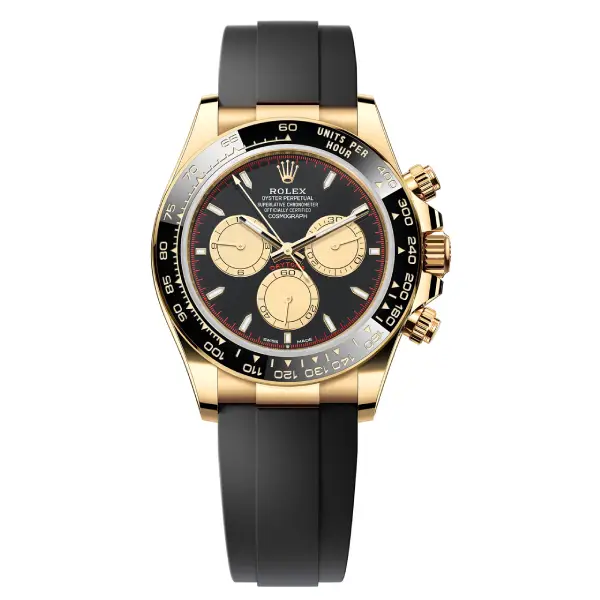
A racing chronograph is a wristwatch or handheld device that includes both standard time display and an integrated stopwatch. It is used to track intervals such as the duration of a lap or sector time on a racing circuit. Operators rely on racing chronographs to time each pass across a start-finish line, monitor event splits, and measure total race duration. The stopwatch function uses separate hands, often for elapsed seconds, minutes, and sometimes hours or fractions of a second.
Timing events in motorsport demands quick response and easy-to-read displays. A racing chronograph addresses these needs by featuring clear markings, strong illumination, and accessible controls. It provides an essential tool for drivers, pit crews, and timekeepers who need fast, accurate reference points during races and practice sessions.
How it differs from a standard chronograph
Unlike general-use chronographs, racing chronographs are engineered for motorsport applications, which require specialized features. Key differences include:
- Enhanced legibility: Racing chronographs use high-contrast dials, large numerals, and bold hands to ensure lap or sector times are readable at a glance, even at speed.
- Optimized controls: Pushers are often enlarged, spaced for operation with gloves, and designed for clear tactile feedback.
- Racing-focused functions: Features such as tachymeter scales, flyback mechanisms, and split-seconds timing are often included to meet specific needs in timing and event tracking.
- Durability and resilience: Racing models are built with materials and construction standards suitable for vibration, impact, and rapid temperature changes common on a track.
- Layout changes: Subdials, markers, and track scales are positioned to enable instant recognition, preventing missed readings in the pressure of motorsport contexts.
Standard chronographs may perform general timing functions, but racing chronographs are systematically designed for the accuracy and speed demanded by motorsport professionals.
How modern chronograph technology works
Chronographs consist of several mechanical components and principles working together to enable precise measurement of elapsed time.
Pushers, start/stop/reset functions
- Start pusher: Activates the chronograph's stopwatch mechanism, causing the sweep hand to move.
- Stop pusher: Halts the stopwatch, freezing the hand to indicate elapsed time.
- Reset pusher: Returns all chronograph hands to their starting positions, preparing the device for a new measurement.
Effective pushers are critical in racing. They must deliver a crisp click, operate reliably under pressure, and remain usable with gloves. Racing models often use enlarged or textured pushers for this purpose.
Clutch systems: horizontal vs vertical
The chronograph clutch system connects and disconnects the stopwatch from the main timekeeping train. Two forms are common:
- Horizontal clutch: Engages traditional side-by-side gears to start the stopwatch. It allows easy viewing of the movement’s action but can cause a minor jump in the chronograph hand on activation.
- Vertical clutch: Uses friction between stacked discs, providing smooth engagement with minimal hand jump and supporting prolonged chronograph use without extra wear on the main movement.
A vertical clutch usually gives more accurate operation in motorsport because it reduces time loss at the point of initiation.
Column wheel vs cam actuation
These mechanisms coordinate the sequence of chronograph operations:
- Column wheel: Resembles a small turret with slots. Provides a precise, smooth engagement as the pushers are pressed and is valued for consistent feel during use. Manufacturing is more complex.
- Cam actuation: Uses a heart-shaped cam and levers to guide the action. This design is simpler and generally more robust, but pusher feel may not be as smooth as with a column wheel.
Both types can function reliably, but column wheel chronographs are often preferred in higher-tier racing setups due to the delicacy and predictability of their operation.
Integrated movement vs modular chronograph
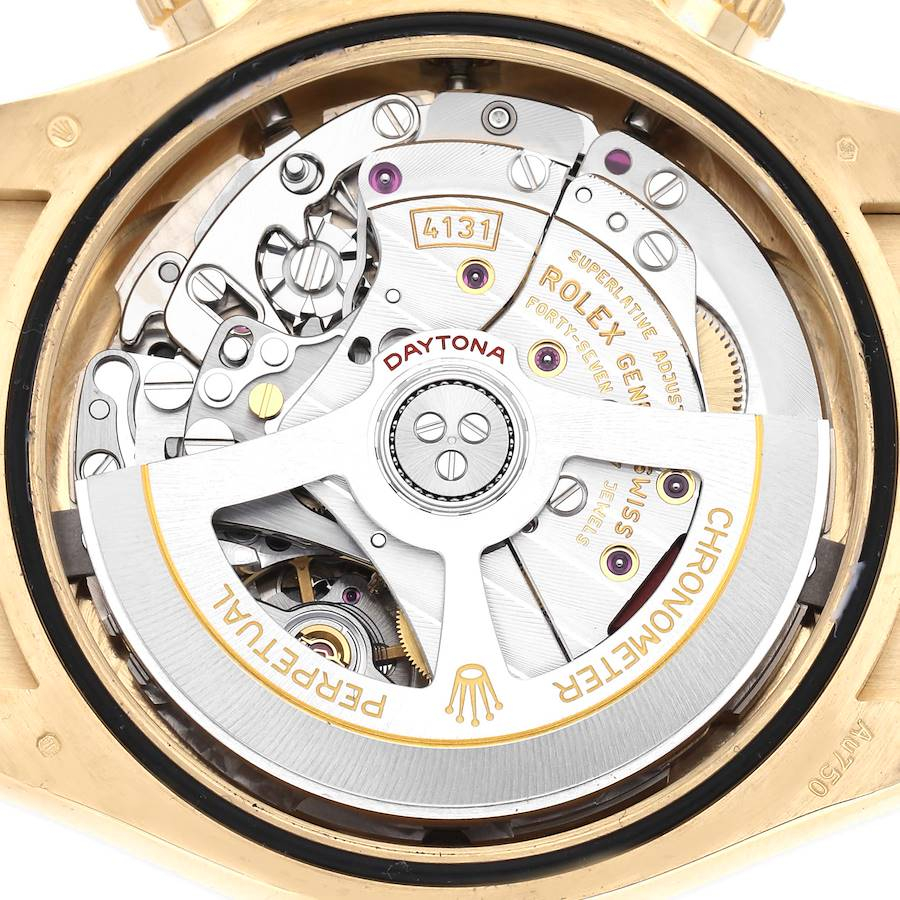
- Integrated movement: The chronograph is incorporated into the main watch mechanism from the start. These watches are often slimmer, with optimized chronograph functions and stability.
- Modular chronograph: A chronograph module is mounted atop a standard movement. This approach can result in a thicker watch and sometimes more servicing complexity, but it enables the use of established timekeeping movements with the additional stopwatch function.
Comparison table:
| Component | Integrated | Modular |
|---|---|---|
| Design | Purpose-built, thinner | Add-on, usually thicker |
| Construction | More complex, cohesive | Easier assembly, adaptable |
| Service | Integrated repair needed | Module can be serviced |
| Application | Premium racing models | Versatile usage |
Racing-specific features
Racing chronographs provide functions tailored for competitive motorsport timing.
Tachymeter scales
A tachymeter converts measured time into average speed, based on travel over a precisely known distance (e.g., one kilometer or mile). The user starts the chronograph at a known point and stops it at the end of the measured distance. The chronograph seconds hand points to the average speed on the tachymeter scale. A tachymeter provides meaningful results only when the distance is constant and known.
Flyback timing
In flyback models, a single pusher will stop, reset, and restart the stopwatch at once. This saves critical seconds in rapid lap or sector timing, allowing seamless timing of consecutive events with fewer actions.
Split-seconds (rattrapante) function
A split-seconds chronograph features two independent stopwatch hands. Both hands start together, but one can be stopped to record an intermediate time while the other continues. Another press reunites them. This function is useful when timing the performance of two cars crossing a finish line moments apart or during intermediate split events.
Lap timing and minute counters
Some models feature dedicated subdials or indicators to display laps completed or elapsed minutes. These tracks provide a visual summary of multi-lap and endurance racing events, aiding real-time race strategy.
High-beat and fractional-second timing
A high-beat movement oscillates more times per second, permitting measurement of shorter intervals down to tenths or hundredths of a second. Such detail may be necessary for benchmarking in competitive scenarios, though it can increase power consumption and maintenance intervals.
Movement and power considerations
Movement type significantly influences chronograph performance, rate stability, and service needs.
Mechanical vs quartz vs solar/hybrid
Below is a comparison of prevalent chronograph movement types:
| Movement Type | Time Accuracy | Maintenance | Power Source | Typical Use Case |
|---|---|---|---|---|
| Mechanical | ±5–20 sec/day | Periodic servicing | Manual/automatic wind | Traditional chronographs |
| Quartz | ±0.5–10 sec/month | Battery replacement | Battery | High-precision timing |
| Solar/Hybrid | Similar to quartz | Cell replacement rare | Light-powered battery | Longevity, minimal maintenance |
Quartz and solar options usually deliver higher timing accuracy and lower upkeep than mechanical designs. Mechanical chronographs are typically chosen for their tactile quality and tradition, but the most precise stopwatch function is usually found in quartz models.
Accuracy, amplitude, and beat rate
- Accuracy: The closeness of measured intervals to real time; quartz movements are stable due to fewer mechanical variables.
- Amplitude: Applies to mechanical types; it is the “arc” of the balance wheel’s swing and influences timekeeping reliability.
- Beat rate: Measures the frequency, commonly noted as vibrations per hour (vph). A higher beat rate (e.g., 36,000 vph) permits finer fraction readings at the expense of greater wear.
Power reserve and winding systems
Mechanical variants feature a power reserve - energy stored to run the watch, usually between 40 and 70 hours. They rely on manual winding or automatic winding via the motion of the wearer’s arm. Quartz and solar chronographs run until power depletes, requiring battery or cell replacement rather than regular winding.
Design choices that matter on track
Selection of a racing chronograph must consider how the device works under actual racing conditions:
- Legibility: Critical for timing; strong contrasts, bold indices, and large hands aid quick checks during motion.
- Pusher feel and glove usability: Oversized, textured pushers ensure the chronograph can be operated smoothly with or without gloves, especially important in pit and track environments.
- Case size, weight, durability: Lighter materials cut arm fatigue. Robust construction withstands bumps, vibration, and rapid wrist movement.
- Water resistance and shock resistance: Racing can expose the device to water or impacts. Confirm ratings are appropriate for your use, and avoid exceeding the manufacturer’s limits.
Practical buying and use guidance
Follow these technical checks when assessing or maintaining a racing chronograph:
- Verify the key features needed for your racing context - this may include flyback, split-seconds, visible tachymeter scale, or lap subdials.
- Favor designs with uncluttered dials and bold markers for quick reference.
- Ensure pushers are reachable and deliver a strong, tactile response with gloves on.
- Avoid excessive subdials or complications that clutter the display or distract from timing.
- Confirm water and shock resistance is rated to meet track conditions and occasional exposure.
- Mechanical models need planned servicing (typically every 3–5 years); quartz or solar models will only need battery or cell replacements.
- Minimize running time of the chronograph’s stopwatch feature on mechanical watches between uses to reduce wear unless the movement is rated for continuous timing.
FAQ
What separates a standard chronograph from a racing chronograph?
A racing chronograph is optimized for motorsport needs - clearer display, user-friendly controls, and timing features suited to track use - while standard chronographs are general-purpose stopwatches.
How do you use the tachymeter on a racing watch?
Start the stopwatch at a known distance marker. When you pass the end point (the set distance), stop it; where the hand points on the tachymeter scale shows average speed. The tachymeter is only valid for events covering a fixed and known distance.
Is a column wheel chronograph always better than cam-actuated?
Column wheel designs provide smoother operation but are more complex. Cam-actuated mechanisms are simpler and more robust. The choice depends on your preference for feel or ease of maintenance.
Why is a vertical clutch important?
Vertical clutches permit smooth, precise start/stop of the chronograph hand and minimize hand jump. This is useful for accurate lap timing and allows the stopwatch to run longer without damaging the mechanism.
What is flyback and when should you use it?
Flyback allows single-button reset and restart, saving valuable time when recording consecutive laps, especially useful in high-speed, repetitive timing.
What does split-seconds mean for racing?
This function lets you time two concurrent events - such as two cars in a race - allowing you to stop and read one event while the second time interval continues.
Can mechanical chronographs match quartz for accuracy?
Mechanical chronographs are typically accurate enough for non-official racing but quartz models offer greater precision for critical timing.
Why is beat rate relevant?
Higher beat rate movements enable timing of smaller increments, supporting the measurement of tenths or hundredths of a second, but need more frequent maintenance.
When is quartz preferable to mechanical for racing timing?
When absolute accuracy and minimal maintenance are top priorities, quartz is preferable.
Which features are vital for racing use?
Easy-to-read dial, responsive and glove-friendly pushers, lap timing, tachymeter scale, reliable water/shock resistance, and focused practical functions for the race environment.
Summary
Racing chronographs are precision timekeeping tools, adapted for the special demands of motorsport. Their core function is combining stopwatch features with legible, durable design. Pushers control elapsed time measurement, supported by clutch and actuation systems tailored for timing accuracy and longevity. Models built for racing incorporate functions such as tachymeter, flyback mechanism, and split-seconds hands.
The choice of movement - mechanical, quartz, or solar/hybrid - affects functional accuracy, upkeep, and power supply. Integrated and modular chronograph designs each offer benefits depending on usage and service preferences. Practical considerations like legibility, pusher usability, and resistance ratings help ensure the chronograph performs under track conditions.
Access to racingchronograph.com is protected with an automated security verification process, designed to ensure continuous operation and protection against malicious bots. Technical performance and site reliability are managed by Performance and Security by Cloudflare, ensuring users worldwide experience stability and security. Specifications and features may vary across models; always consult manufacturer details for intended use, timing accuracy, and durability under racing conditions.